

Sonnets
Shakespeare’s Sonnets are among the most lyrical and moving pieces of poetry in any language, abounding with examples of his genius for wordplay, rhythm and metaphor and dealing with the eternal themes of love, memory, beauty and the ravishes of time. First published in 1609, after Shakespeare had written many of his most famous works, the Sonnets have been the subject of literary curiosity ever since, mainly concerning the identity of the two addressees, ‘Mr W.H.’ and the ‘Dark Lady’, and the light they could shine on Shakespeare’s life.
This collection constitutes one of English literature’s most profound poetic meditations on life and love, and is a vital complement to the plays, offering clues to Shakespeare’s own biography. Presented here in an edition that makes them accessible to twentieth-century readers, these poems are worth returning to again and again.
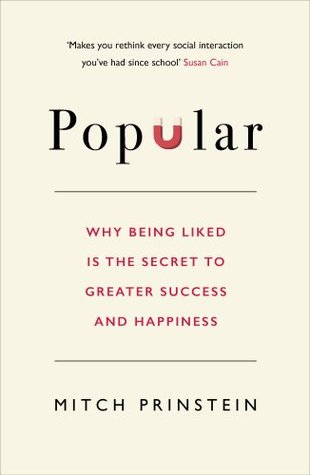
The Popularity Illusion: Why status is toxic but likeability wins all
When did you last count how many followers you have on Instagram or Twitter? Have you noticed how obsessed politicians are with opinion polls? How many ‘likes’ did that post get you thought was so funny? What’s happening with that friend who keeps cancelling on you last minute? What does that little voice in your head say to you when you present to a room full of people? And are you aware just how much your behaviour today is driven by your experiences of popularity as a teenager?
We live in an era that is completely obsessed with popularity, both in the real and, increasingly, in the virtual world where hard data from our social media channels show us just how popular and visible we really are. Parents and teachers are becoming increasingly concerned about the high anxiety (especially amongst young girls) surrounding young people and their insatiable appetite for acceptance online – all at the expense of school work, real friends and healthy self-esteem.
The Popularity Paradox is a fresh and fascinating book about the science of popularity. Based on 20 years of research and written by popularity expert Mitch Prinstein, it investigates what popularity is, why we care about it so much – even if we don’t think we do – what kind of popularity is worth caring about and how we can get the popularity we want, even if we didn’t have it when we were younger. Although very much written for a general audience, the book will also appeal to parents wishing to support children through their formative years to ensure that their experience of popularity today shapes them positively as adults in the future.

Sisters’ Entrance
2015 World Poetry Slam Champion and Woman of the World co-Champion Emtithal “Emi” Mahmoud presents her hauntingly beautiful debut poetry collection.
Brimming with rage, sorrow, and resilience, this collection traverses an expansive terrain: genocide; diaspora; the guilt of surviving; racism and Islamophobia; the burdens of girlhood; the solace of sisterhood; the innocence of a first kiss. Heart-wrenching and raw, defiant and empowering, Sisters’ Entrance explores how to speak the unspeakable.

Commander in Chief: FDR’s Battle with Churchill, 1943
“Superb . . . Hamilton brilliantly sets out Roosevelt’s foresight, determination and skill in establishing a new world order.” —Fareed Zakaria, Washington Post
“Provocative . . . stimulating to follow.” —Thomas E. Ricks, New York Times Book Review
1943 was the year of Allied military counteroffensives, beating back the forces of the Axis powers in North Africa and the Pacific—the “Hinge of Fate,” as Winston Churchill called it. In Commander in Chief Nigel Hamilton reveals FDR’s true role in this saga: overruling his own Joint Chiefs of Staff, ordering American airmen on an ambush of the Japanese navy’s Admiral Yamamoto, facing down Churchill when he attempted to abandon Allied D-day strategy (twice). This FDR is profoundly different from the one Churchill later painted. President Roosevelt’s patience was tested to the limit quelling the Prime Minister’s “revolt,” as Churchill pressured Congress and senior American leaders to focus Allied energy on disastrous fighting in Italy and the Aegean instead of landings in Normandy. Finally, in a dramatic showdown at Hyde Park, FDR had to stop Churchill from losing the war by making the ultimate threat, setting the Allies on their course to final victory.
In Commander in Chief, Hamilton masterfully chronicles the clash of nations—and of two titanic personalities—at a crucial moment in modern history.
“The rebuttal to the Churchill multivolume history . . . The war retains its power to shock and surprise.” — Boston Globe

Bruiser
“There’s a reason why Brewster can’t have friends – why he can’t care about too many people. Because when he cares about you, things start to happen. Impossible things that can’t be explained. I know, because they’re happening to me.”
When Brontë starts dating Brewster “Bruiser” Rawlins – the guy voted “Most Likely to Get the Death Penalty” her twin brother, Tennyson, isn’t surprised. But then strange things begin to occur. Tennyson and Brontë’s scrapes heal unnaturally fast, and cuts disappear before their eyes. What at first seems like their good fortune turns out to be more than they bargained for…much more.

The Hungry Tide
Between the sea and the plains of Bengal lies an immense archipelago of islands. Here, for hundreds of years, only the truly dispossessed braved the man-eating tigers and the crocodiles that rule there, to eke out a precarious existence from the mud.
The settlers of the Sundarbans believe that anyone without a pure heart who ventures into the watery labyrinth will never return. It is the arrival of Piya Roy, of Indian parentage but stubbornly American, and Kanai Dutt, a sophisticated Delhi businessman, that disturbs the delicate balance of settlement life. From this moment, the tide begins to turn.

The Unexpected Joy of Being Sober
Ever sworn off alcohol for a month and found yourself drinking by the 7th? Think there’s ‘no point’ in just one drink? Welcome! There are millions of us. 64% of Brits want to drink less.
Catherine Gray was stuck in a hellish whirligig of Drink, Make horrible decisions, Hangover, Repeat. She had her fair share of ‘drunk tank’ jail cells and topless-in-a-hot-tub misadventures. But this book goes beyond the binges and blackouts to deep-dive into uncharted territory: What happens after you quit drinking? This gripping, heart-breaking and witty book takes us down the rabbit-hole of an alternative reality. A life with zero hangovers, through sober weddings, sex, Christmases and breakups.
In The Unexpected Joy of Being Sober, Catherine Gray shines a light on society’s drink-pushing and talks to top neuroscientists and psychologists about why we drink, delving into the science behind what it does to our brains and bodies. Much more than a tale from the netherworld of addicted drinking, this book is about the escape, and why a sober life can be more intoxicating than you ever imagined. Whether you’re a hopelessly devoted drinker, merely sober-curious, or you’ve already ditched the drink, you will love this book.

A Fistful of Shells: West Africa from the Rise of the Slave Trade to the Age of Revolution
Winner of the Nayef Al-Rodhan Prize for Global Cultural Understanding 2019
Shortlisted for the Cundill History Prize and the Pius Adesanmi Memorial Award
An Observer and Wall Street Journal Book of the Year 2019
‘Astonishing, staggering’ Ben Okri, Daily Telegraph
A groundbreaking new history that will transform our view of West Africa
By the time of the ‘Scramble for Africa’ in the late nineteenth century, Africa had already been globally connected for many centuries. Its gold had fuelled the economies of Europe and Islamic world since around 1000, and its sophisticated kingdoms had traded with Europeans along the coasts from Senegal down to Angola since the fifteenth century. Until at least 1650, this was a trade of equals, using a variety of currencies – most importantly shells: the cowrie shells imported from the Maldives, and the nzimbu shells imported from Brazil.
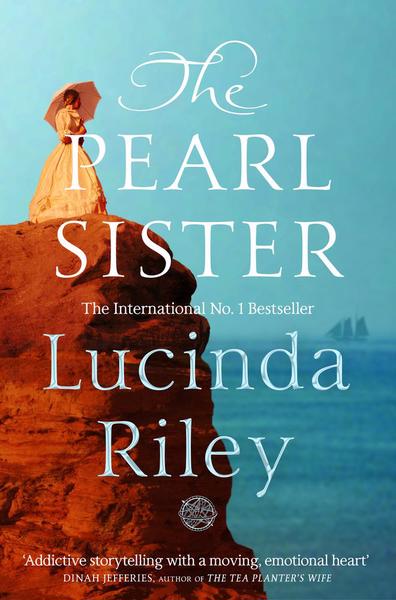
The Pearl Sister
From the breathtaking beaches of Thailand to the barely tamed wilds of colonial Australia, The Pearl Sister is the fourth “brilliantly written” (Historical Novel Society) novel in New York Times bestselling author Lucinda Riley’s epic Seven Sisters series. “Fans of Kristin Hannah, Kate Morton, and Riley’s previous novels will adore” (Booklist) this adventurous and moving story about two women searching for a place to call home.

You Look Like a Thing and I Love You

WaR: Wizards and Robots
When a young man breaks into her home claiming her life is in danger, Ada Luring’s world changes forever. Geller is a wizard, on the run from his father’s hidden clan who want to kill Ada and her mother. Sara Luring is the scientist who will create the first robot, the wizards’ age-old foes.
But a robot has travelled back in time to find Ada, and will lay everything on the line to protect her, as she may just be the key to preventing the earth’s destruction in the future.
Ada, Geller and the robots must learn to work together to change the past and secure the future. But they don’t have much time before a mysterious enemy launches its attack on Earth…

Threads of Life: A History of the World Through the Eye of a Needle
A globe-spanning history of sewing, embroidery, and the people who have used a needle and thread to make their voices heard
From the political propaganda of the Bayeux Tapestry, World War I soldiers coping with PTSD, and the maps sewn by schoolgirls in the New World, to the AIDS quilt, Hmong story clothes, and pink pussyhats, women and men have used the language of sewing to make their voices heard, even in the most desperate of circumstances.
Threads of Life is a chronicle of identity, protest, memory, power, and politics told through the stories of needlework. Clare Hunter, master of the craft, threads her own narrative as she takes us over centuries and across continents—from medieval France to contemporary Mexico and the United States, and from a POW camp in Singapore to a family attic in Scotland—to celebrate the age-old, universal, and underexplored beauty and power of sewing. Threads of Life is an evocative and moving book about the need we have to tell our story.